

A Typical Day at a Tantra Retreat
If you are new to tantra, you might be wondering what actually happens at a tantra retreat. While every retreat is unique, most follow a similar rhythm that balances practice, integration, and rest. This guide walks you through a typical experience so you know what to expect and can decide if it is the right fit for you.
A typical day might include: morning meditation, breathwork, and movement to start grounded; late morning workshops on tantra principles and theory; afternoon partner practices and conscious exercises in a safe space; and evening integration circles, sharing, or nourishing downtime.
Curious what a full week can look like? See a detailed example schedule from one of our retreats. → A Day in a Tantra Retreat
What Kind of Practices Can You Expect?
Tantra retreats are more than just theory. You will be guided through a variety of practices designed to expand awareness and deepen your relationship with yourself and others.
Common practices include: conscious touch and tantra massage — learning the art of giving and receiving with presence; breathwork and energy practices to expand awareness and release stored tension; communication exercises to deepen honesty, boundaries, and connection; meditation and embodiment to come home to your body and inner stillness; and rituals and ceremonies to honor intention and create meaningful shifts.
Not all retreats include the same practices. Some focus purely on meditation and breathwork, while others incorporate conscious touch. Always read the retreat description carefully.
Are Tantra Retreats Sexual?
One of the biggest misconceptions about tantra retreats is that they are automatically sexual.In reality, many tantra retreats are not sexual at all.Most reputable beginner retreats focus on mindfulness, embodiment, emotional awareness, conscious communication, breathwork, meditation, and structured connection exercises — not explicit sexuality.Some advanced retreats may explore sexual energy practices more directly, but even then, professional retreats emphasize consent, boundaries, choice, and emotional safety above everything else.
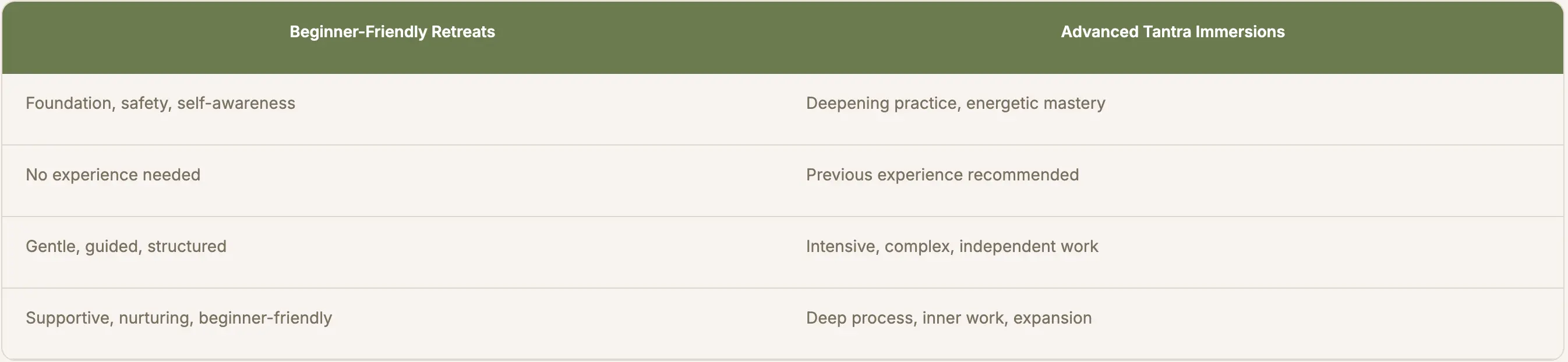
Many beginners worry that tantra retreats are secretly sexual or boundary-pushing. In reality, reputable retreats prioritize consent, structure, and emotional safety. → Read our full guide: Are Tantra Retreats Sexual?
Who Are Tantra Retreats For?
Tantra retreats attract a much wider range of people than most beginners expect.
Some people attend because they feel emotionally disconnected from themselves or their relationships. Others come during periods of transition, healing, burnout, grief, or personal growth.Many participants are simply looking for:
- deeper connection
- more presence in their body
- healthier intimacy
- emotional openness
- authentic communicationa
- break from constantly living in their head
You do not need to be “spiritual,” experienced, highly confident, or part of a couple to attend.In fact, many beginners arrive feeling nervous, skeptical, shy, or uncertain at first.
What If I Come Alone? Attending alone is extremely common.Many retreats welcome solo participants and intentionally create structured exercises that help people connect safely and gradually.Reputable retreats do not force intimacy or social pressure. Good facilitation creates an environment where participants can engage at their own pace.
Not sure whether a couples retreat or solo retreat would suit you best? Some retreats focus on relationship work, while others are designed for individual healing, embodiment, or personal growth.→ Explore our guide: Tantra Retreats for Couples vs Singles
What Makes a Retreat Feel Safe?
Safety is the foundation of any authentic tantric practice. A reputable retreat will always prioritize consent — clear agreements and permission before any practice begins. Boundaries are not just respected, they are actively taught as part of the practice itself. Professional facilitation means experienced teachers who can hold a safe, structured container for the group.
You are never forced to participate in any exercise. Sitting out is always an option, and a good retreat will make this clear from the very beginning. Emotional safety — a supportive environment free from judgment or pressure — is what separates a reputable retreat from a problematic one.
A good tantra retreat teaches you how to set boundaries, not how to dissolve them. If a retreat does not clearly address consent and safety in its description, that is a red flag. → How to Choose the Right Tantra Retreat
Final Thoughts
Attending a tantra retreat is a courageous step toward deeper self-awareness and connection. It is an opportunity to slow down, listen to your body, and relate to others with genuine honesty. There is no single right way to experience tantra — what matters most is finding a retreat that feels safe, grounded, and aligned with where you are right now.
Beginner-Friendly Retreats
Explore Tantra Retreats That Feel Safe, Grounded, and Beginner-Friendly
Browse retreats with clear structure, professional facilitation, and emotionally mature environments designed to support deeper connection, embodiment, and personal growth. Explore our handpicked selection of tantra retreats around the world and find the one that calls to you.